
Overview #
Load balancing is essential for distributing incoming network traffic across multiple backend servers to ensure high availability, reliability, and performance. In Cloud7, the Load Balancers module consists of three key components:
- Load Balancers – The main entry point that distributes traffic.
- Listeners – Define how traffic is received on the load balancer.
- Pools – A group of backend servers that handle the requests.
A Listener defines how the Load Balancer accepts incoming network traffic. It listens on a specific protocol and port and forwards requests to the backend Pool.
List Listeners #
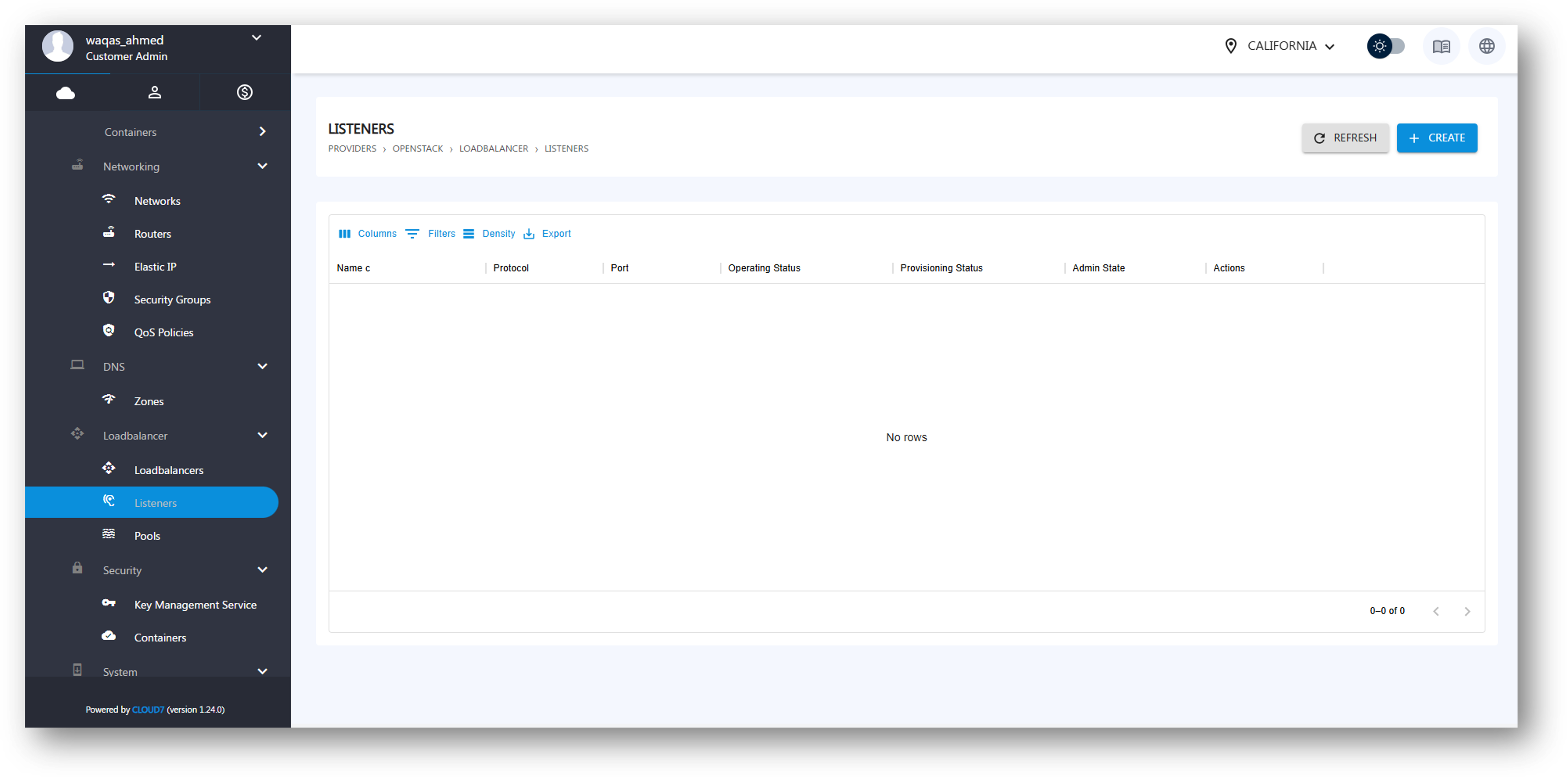
The Listeners listing page includes:
- Login to Cloud7.
- Navigate to Providers >> <Provider Name> >> Networking >> Listeners under the customer interface to view the list of all the Listeners. Following are the column attributes of these Listeners on the listing page:
- Name – The name of the Listener.
- Protocol – The network protocol (e.g., HTTP, HTTPS, TCP).
- Port – The port number for traffic.
- Operating Status – Shows the current operational state.
- Provisioning Status – Displays the provisioning state.
- Admin State – Indicates whether the Listener is active.
- Actions – Options to manage or delete the Listener.
Create Listener #
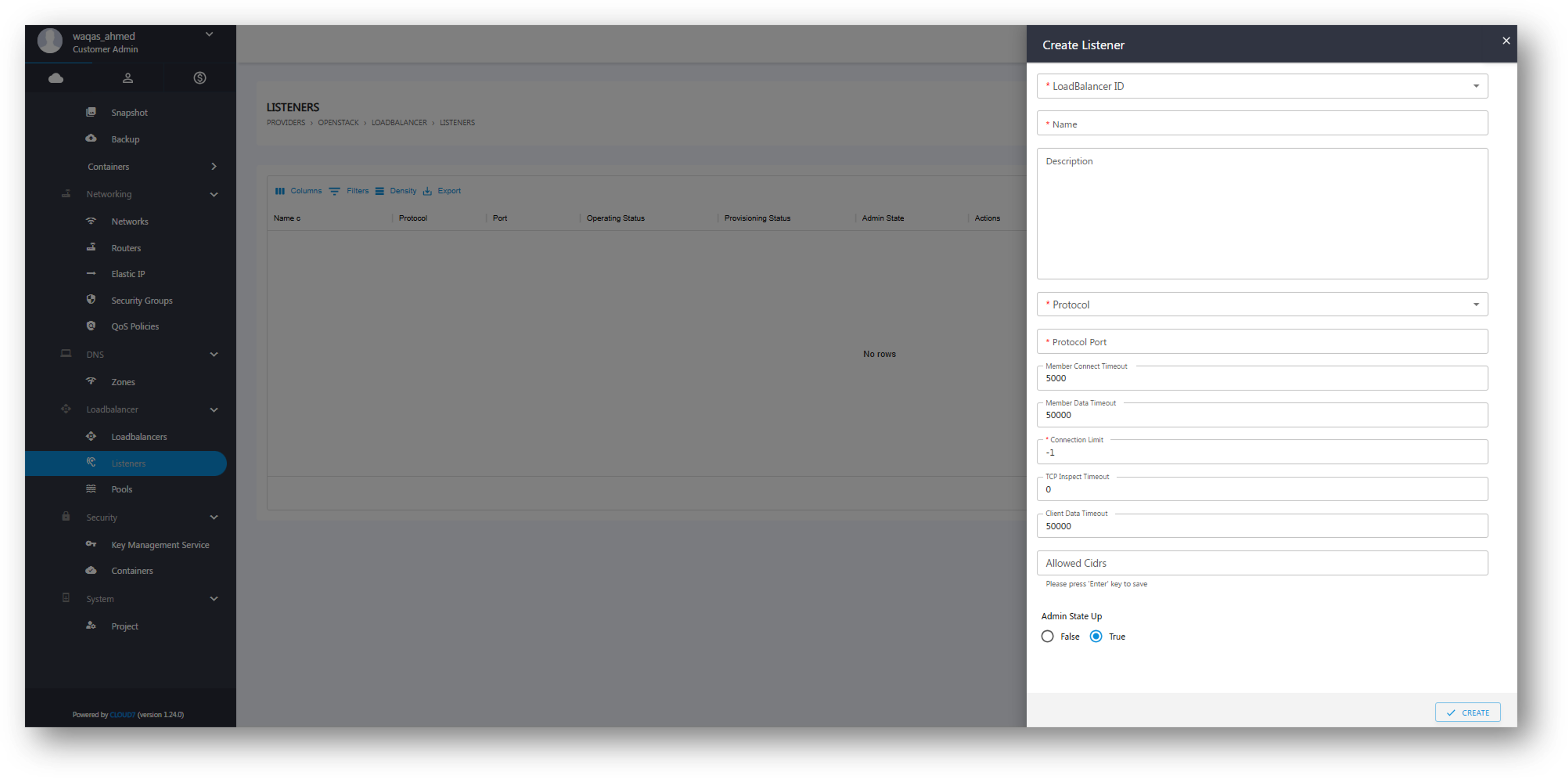
To create a Listener:
- Click Create Listener.
- Enter the necessary information:
- Load Balancer ID – Select the Load Balancer to attach the Listener.
- Name – Define a name for the Listener.
- Description – Optional description.
- Protocol – Choose the protocol (e.g., HTTP, HTTPS, TCP).
- Protocol Port – Specify the port number.
- Member Connect Timeout – Set timeout for backend connections.
- Member Data Timeout – Configure timeout for receiving data from members.
- Connection Limit – Limit the number of connections.
- TCP Inspect Timeout – TCP inspection timeout value.
- Client Data Timeout – Timeout for client-side data exchange.
- Allowed CIDRs – Define allowed IP ranges.
- Admin State Up – Toggle between True (Active) and False (Inactive).
- Click Create to set up the Listener.